Exploring Architects' & Designers' Perspectives on AI
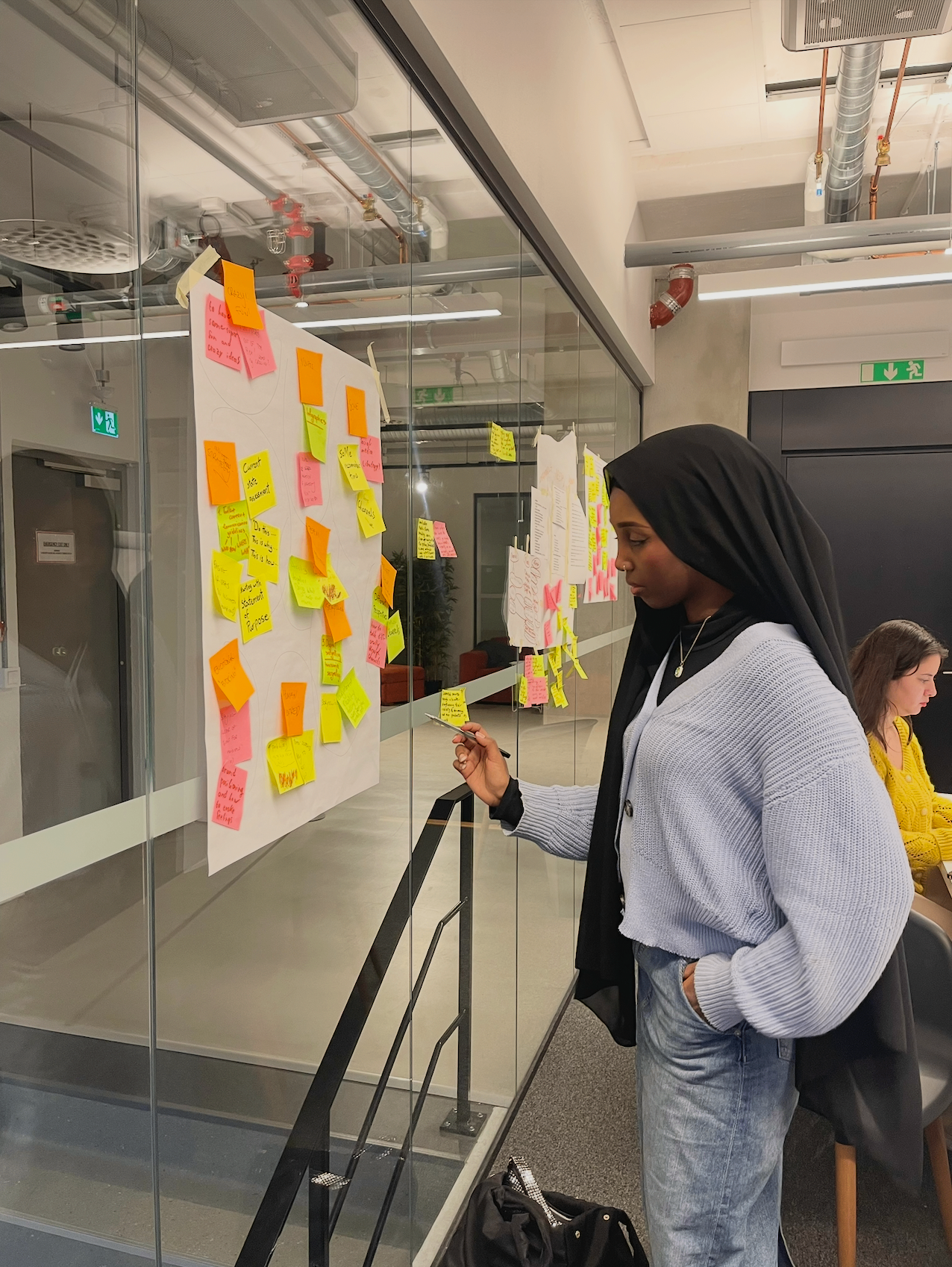
A research collaboration with NCS Colour, in my final year of studies. The question was simple: how do architects and designers actually feel about AI entering their creative process — especially around colour? To answer it I went out into the city. Studios, schools, surveys, long conversations. Then I sat down and made sense of what I heard.
- Client
- NCS Colour
- Year
- 2024
- Role
- User researcher
- Deliverables
- — Interview guide & recruitment plan— Qualitative coding & thematic synthesis— Insight report with design implications
The starting point
My first time leading research. No template, no team — just a brief from NCS Colour and a city to work in.
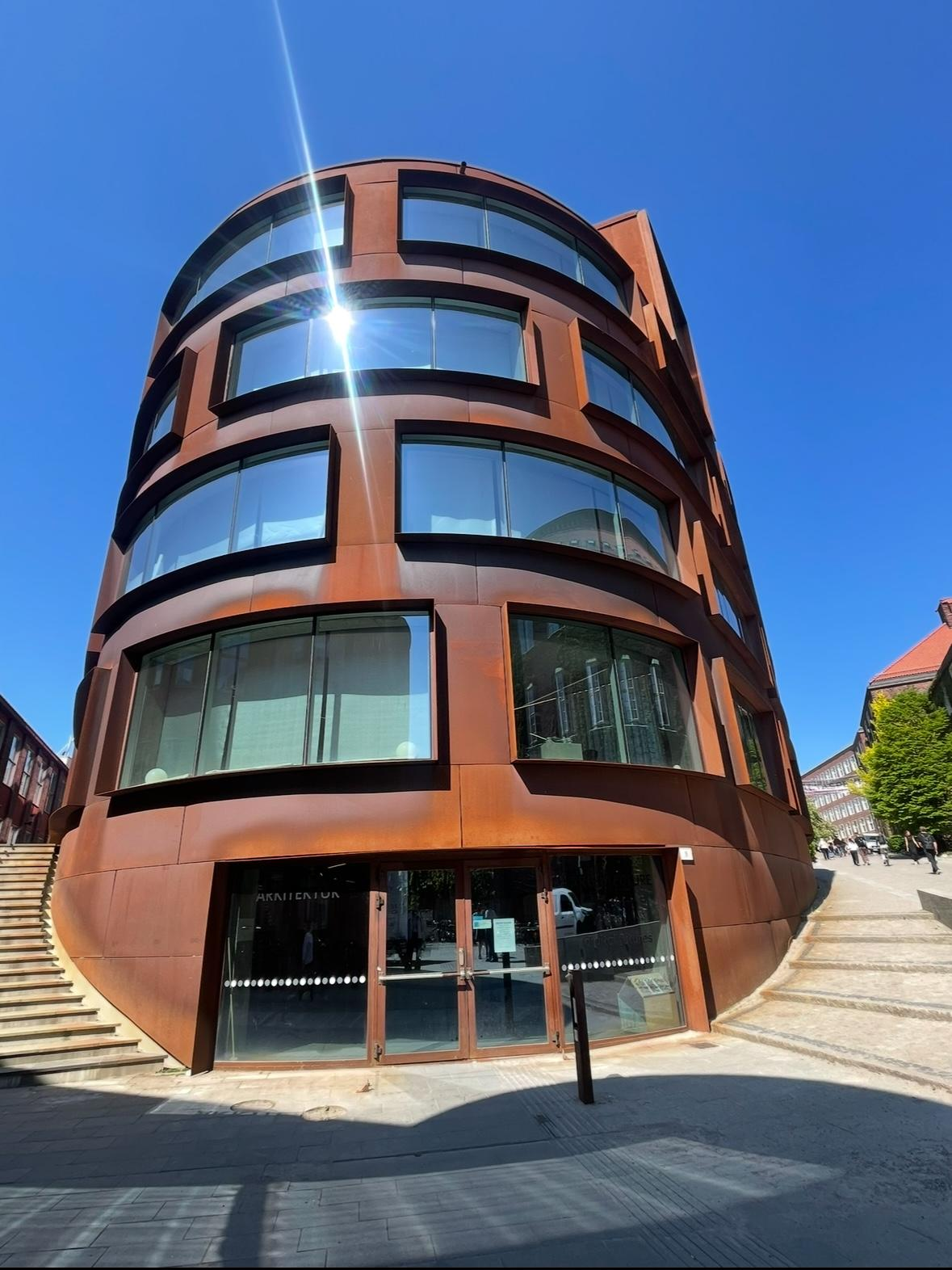
I knocked on studio doors across Stockholm. Sat with architecture students at KTH. Sent out a survey, then followed it with longer conversations whenever someone had something to say.
Out of all of it, one question kept surfacing: how do architects and designers really feel about AI showing up in their creative process — and what does that mean for the way they choose colour?
Method
A survey to architects, interior designers and digital designers. Semi-structured interviews to go deeper. Then thematic coding — listening for the same words showing up across different people, and for the silences that meant just as much.
Synthesis — what 20+ designers told us
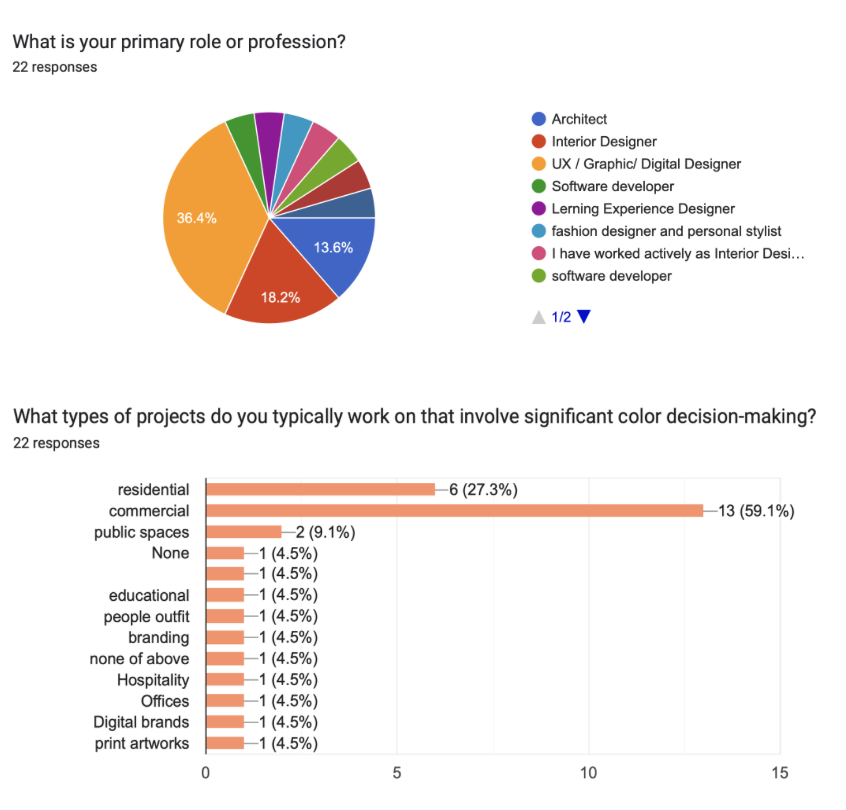
Who showed up: mostly UX, graphic and digital designers, followed by interior designers and architects. A wide spread of perspectives on what colour even means in their work.
Where they work: residential and commercial projects — the kind where a colour decision lands in someone's living room or office for years.
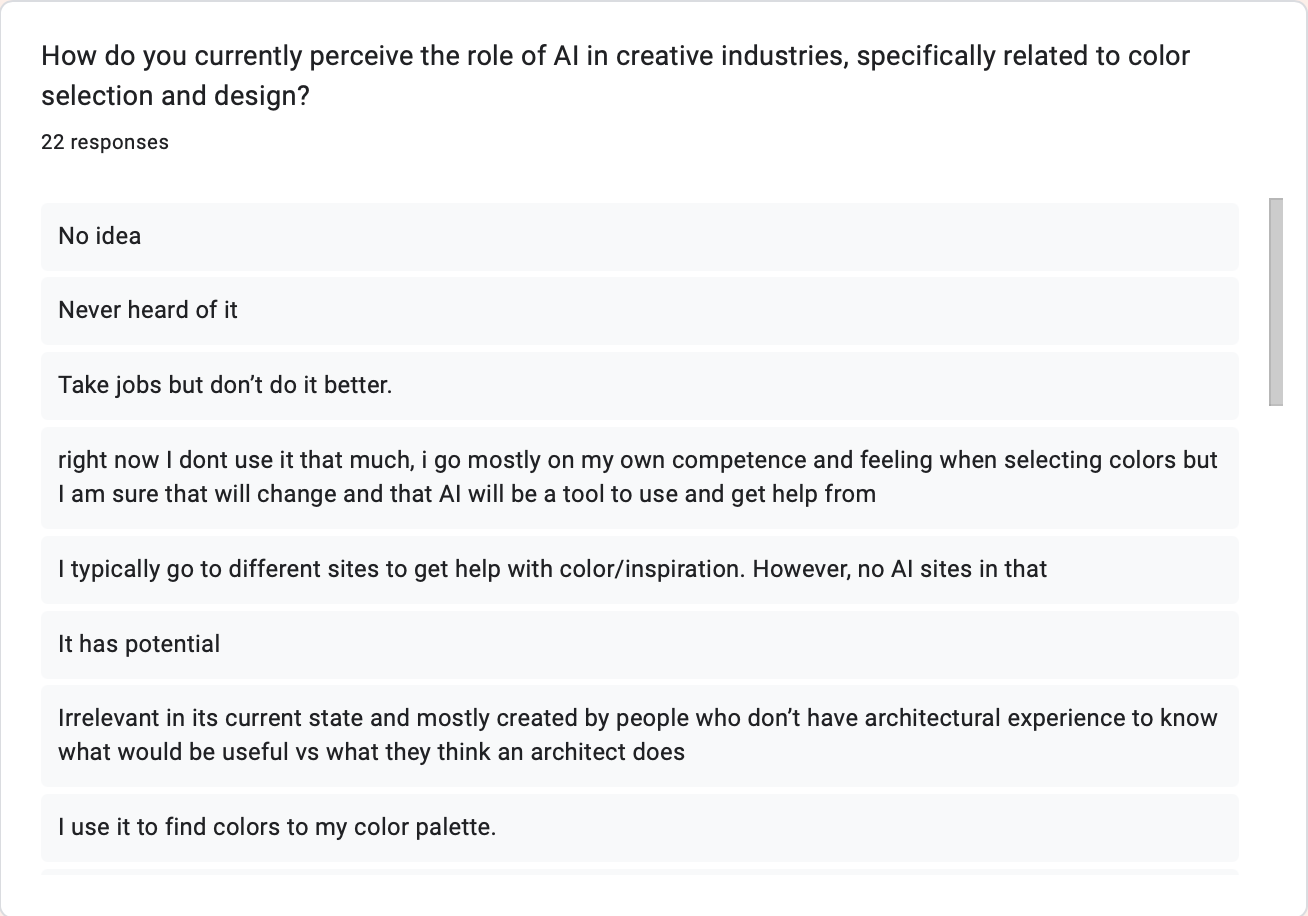
How they feel about AI: split. Curious, hesitant, skeptical, hopeful — sometimes all at once. The takeaway: don't promise value, prove it.
What they already use: ChatGPT, Adobe Sensei, Photoshop generative fill, Canva, Figma plugins, Midjourney. Familiar tools. Almost no one is using AI specifically for colour.
Where they see the upside: speed, trend signals, palettes that feel made for the project — not just generated near it.
Where they see the risk: AI replacing the part of the job that feels like craft. And tools that don't fit the way they already work.
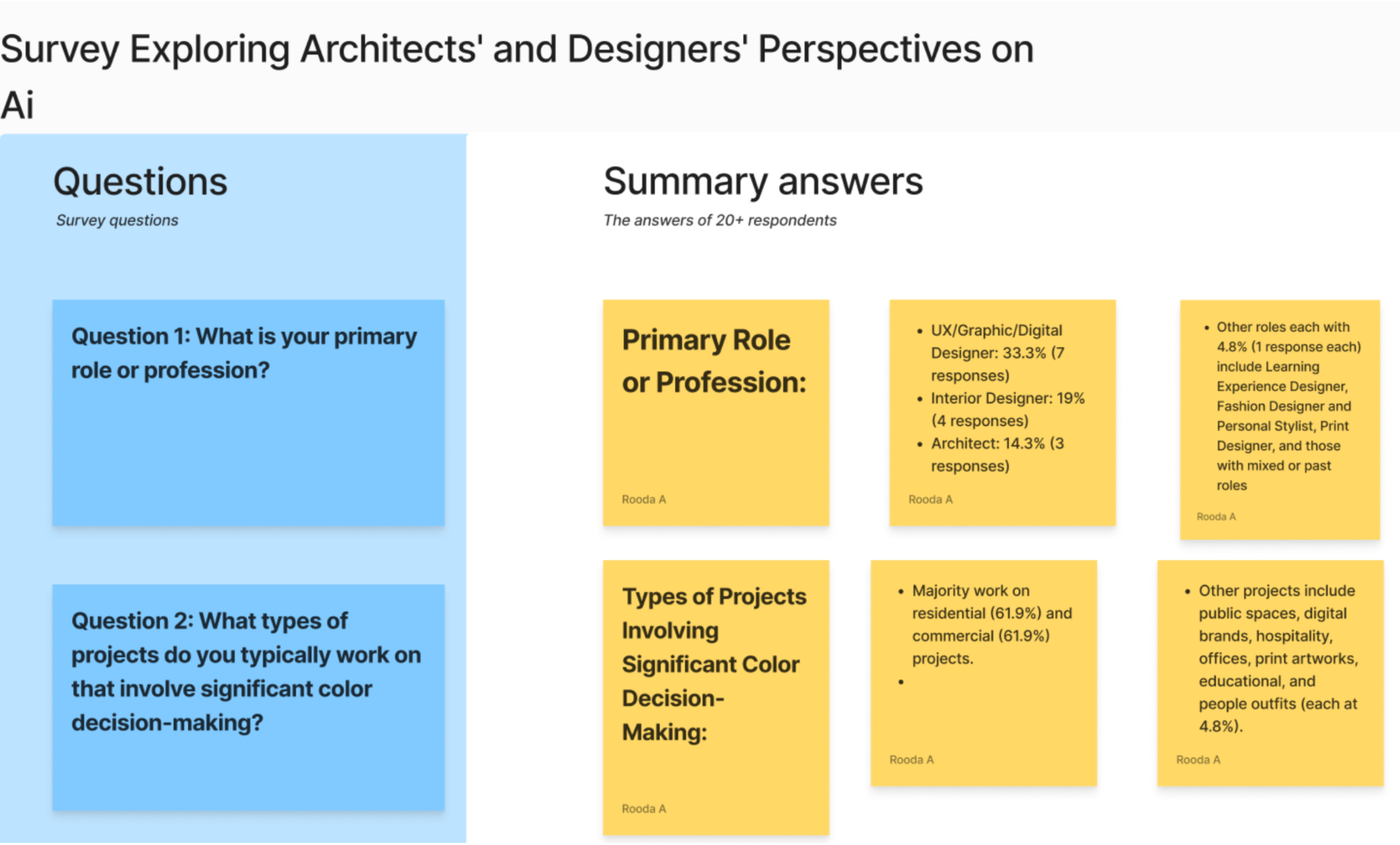
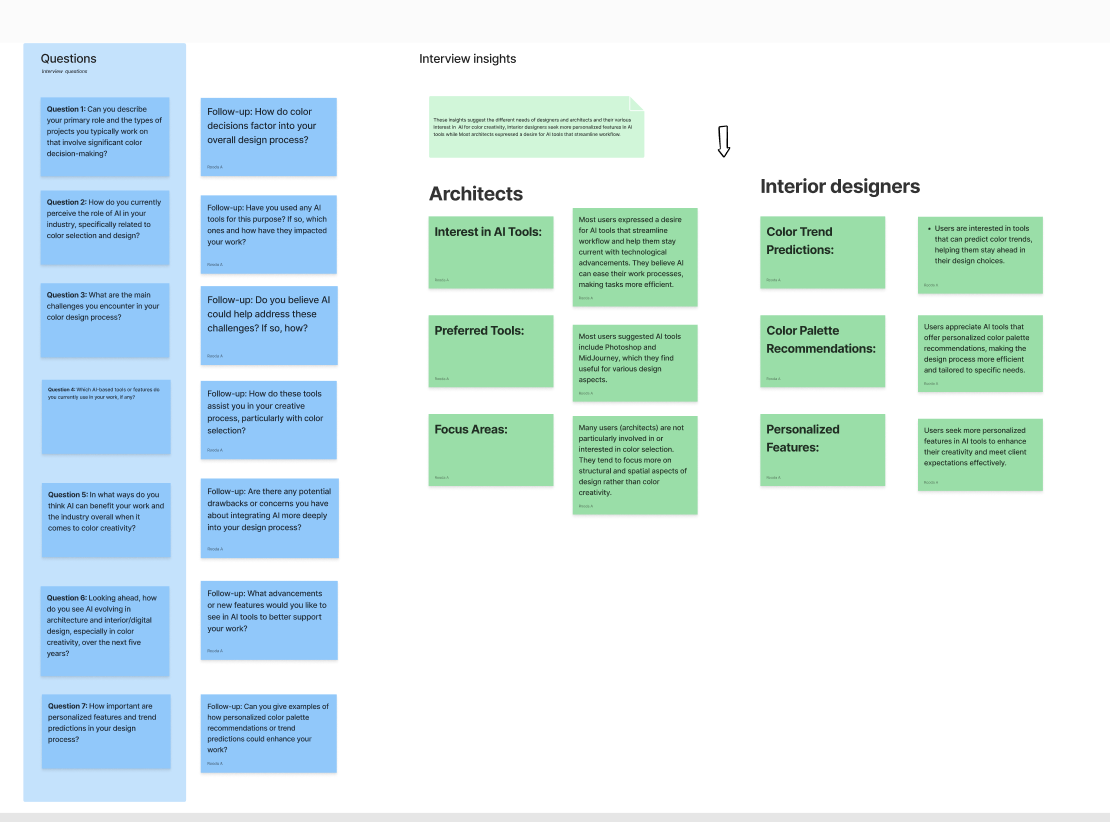
Interview insights — architects vs interior designers
Architects wanted speed. Workflow tools. Something that keeps them current. Many of them barely touch colour — their job is structure and space.
Interior designers wanted intimacy. Palettes that know the client. Trend signals they can trust. Tools that fit into their rhythm instead of fighting it.
Both camps named the same favourites: Photoshop and Midjourney. Useful — but not built around how designers actually think about colour.
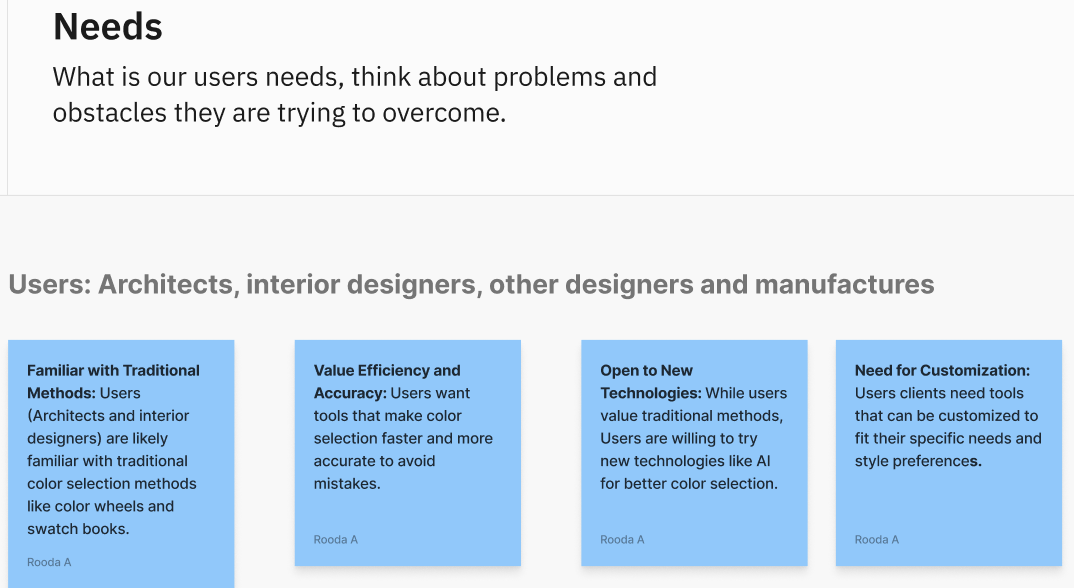
Needs — what users are really trying to overcome
They already have rituals. Colour wheels, swatch books, the feel of paper between fingers. That's not nostalgia — that's how trust gets built.
They want faster and more accurate. Not faster and embarrassing. A mistake here is a mistake they have to defend to a client.
They're open to AI — when it earns its way in. Curiosity is there. Patience is not.
They want tools that bend to the project. The brand. The client. Not a generic palette dressed up as personalisation.
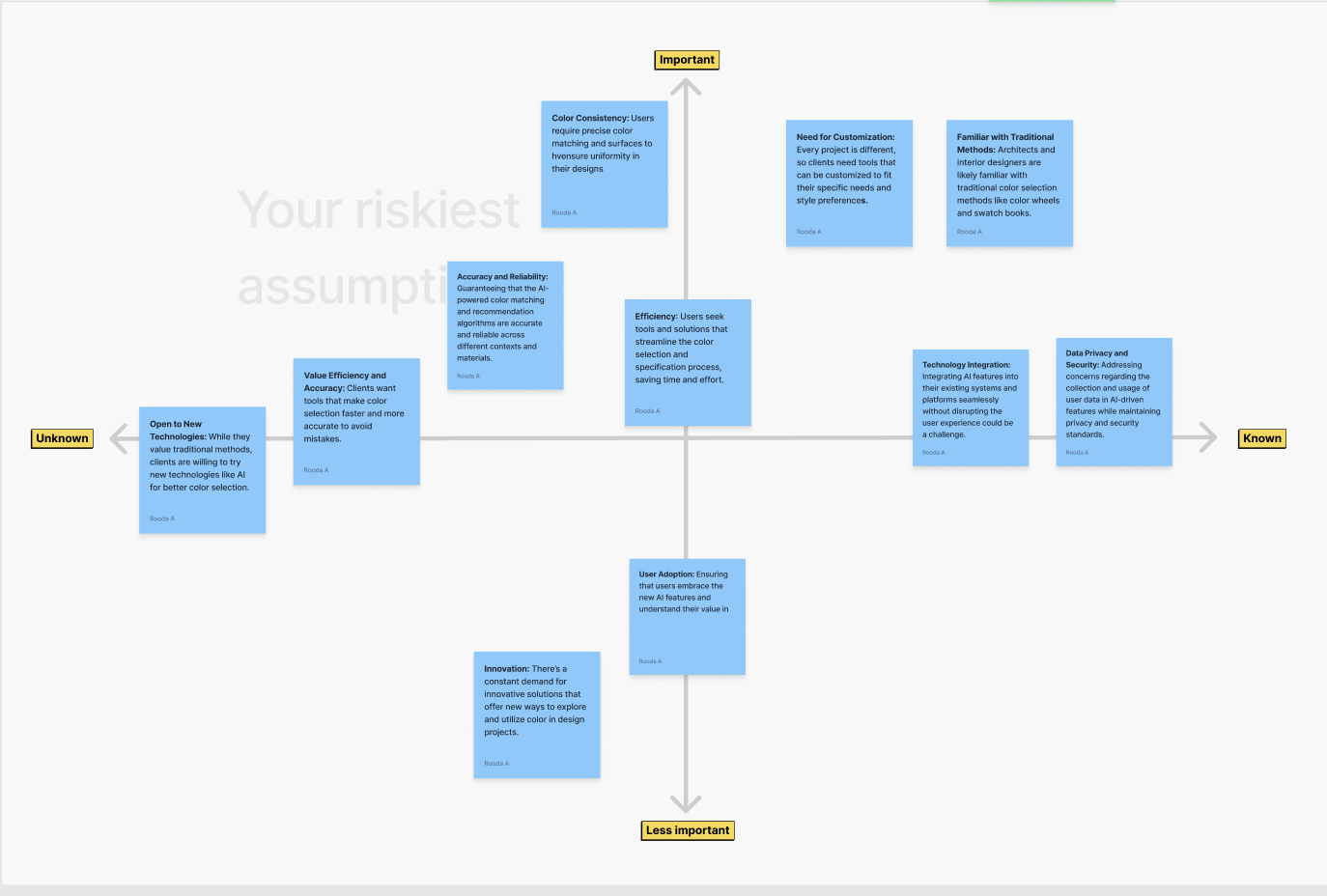
How might we…
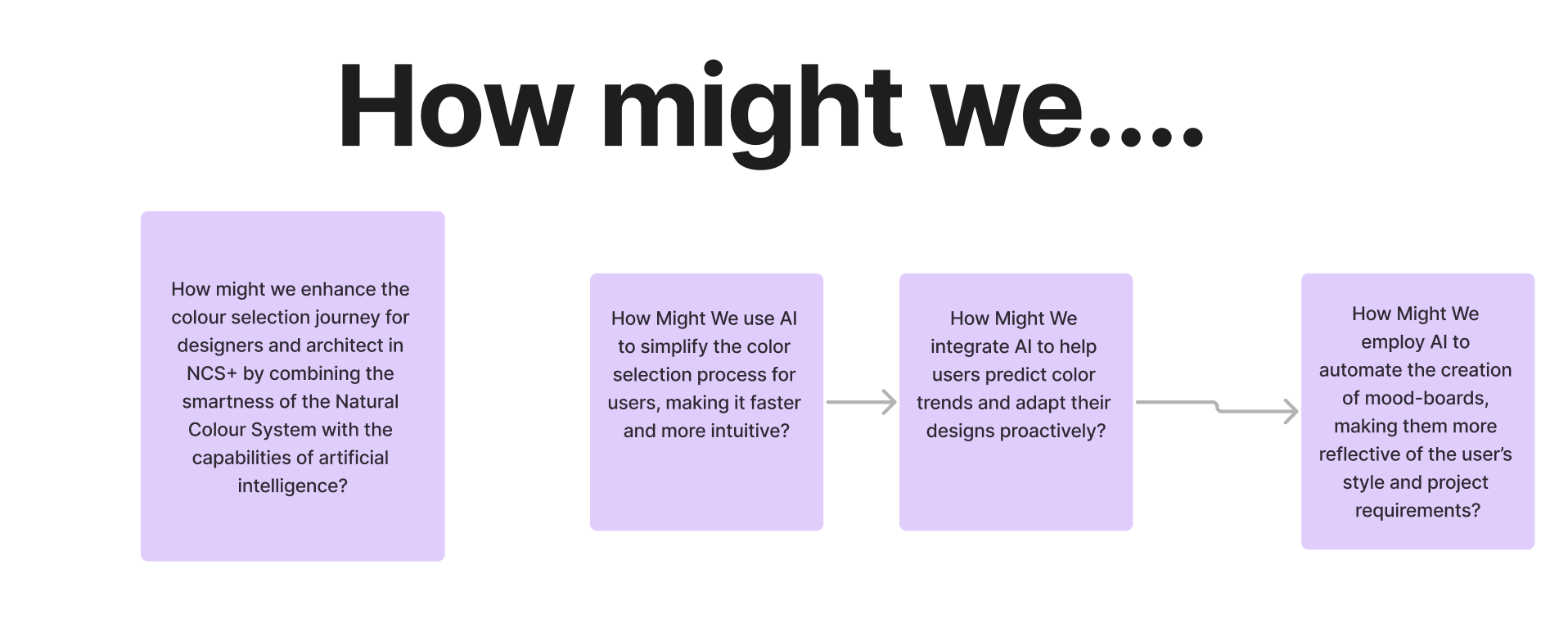
The big one: how might we bring the intelligence of the Natural Colour System and the capabilities of AI into one place inside NCS+ — and make the colour journey better, not just busier?
Three smaller ones underneath. How might we make colour selection feel faster and more intuitive? How might we help designers see trends coming, not just react to them? How might we let mood-boards build themselves — but still feel personal?
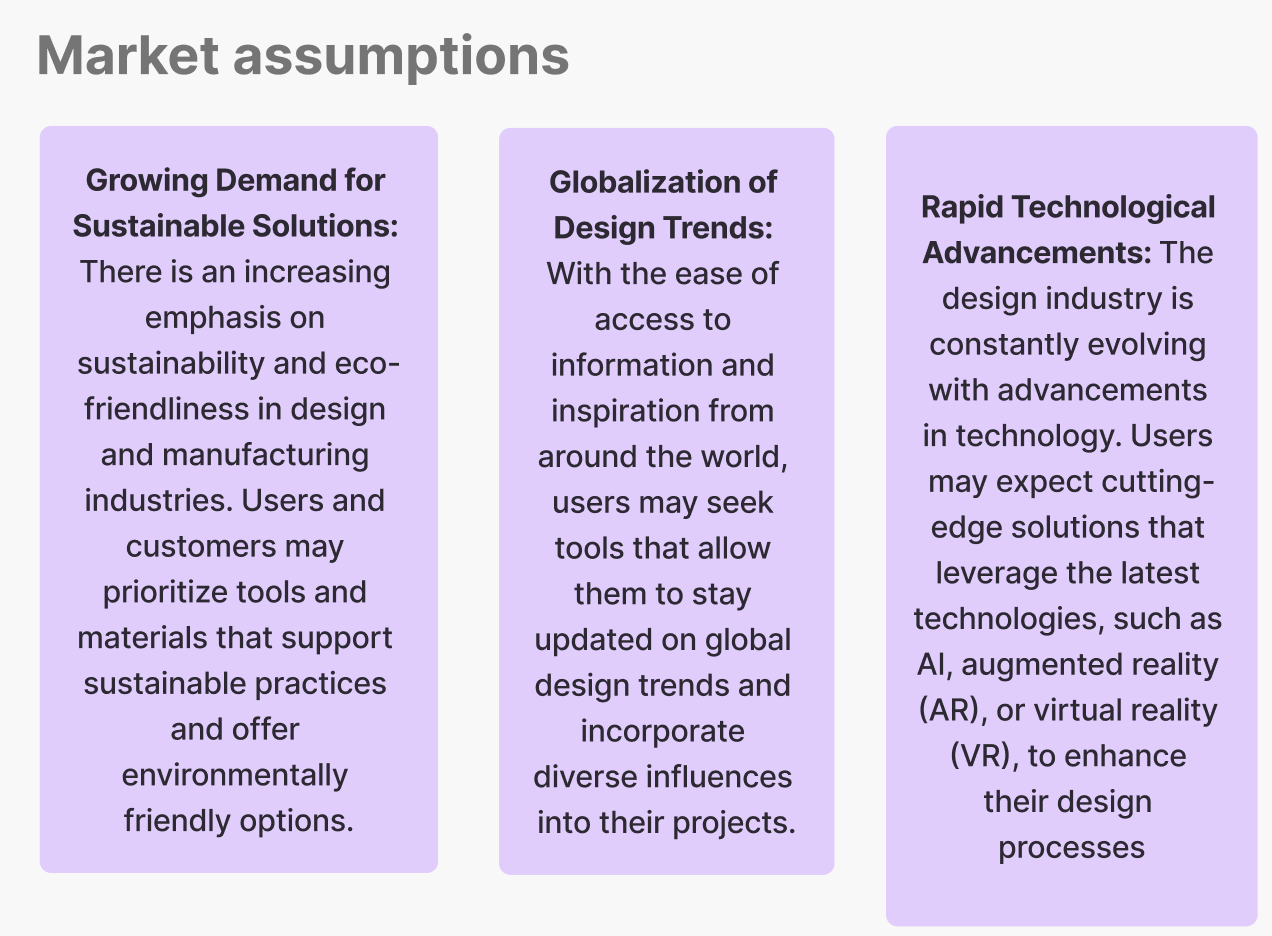
Sitting behind all of it: the world is moving towards sustainability, design trends are going global, and AI, AR and VR are quietly raising what users expect from any creative tool.
In conclusion
The appetite for AI in colour is real. But generic generation isn't going to earn its place. Designers need tools that meet them where their work actually happens — and language that explains the value plainly.
For me, the project changed how I run discovery. I started listening to resistance as data, not noise — and designing around the decisions people refuse to give up.
- User research
- Qualitative
- AI in design